
This publication is produced in partnership with Project UNITY’s Catalyst Academy Class of 2025, a student public health research and education program.
Abstract
Lung cancer, characterized by abnormal cell growth in the lungs, is projected to affect an estimated 226,600 people in the United States in 2025.1 In addition to smoking, occupational hazards contribute to rising incidence rates of lung cancer in younger populations. Construction workers are particularly at risk due to frequent contact with hazardous substances, including silica, asbestos, and lead. However, preventative treatment is largely absent and inaccessible due to high costs, lack of company coverage, and other factors. To address this issue, multiple social determinants were analyzed to design an effective intervention that promotes preventive care among construction workers. Thirty-one sources were used from PubMed, Google Scholar, and JSTOR. Articles were selected based on their relevance to occupational exposure, health disparities, and intervention strategies. Stakeholder perspectives were obtained through an interview. Findings were then synthesized into an intervention with an accompanying plan of action. The results demonstrate that uninsured laborers, racial minorities, and immigrant construction workers in Cincinnati, Ohio, are among the most at risk. Key social determinants include limited access to healthcare, poor workplace regulation, socioeconomic inequality, and misguided social norms. Existing interventions were found to have limited reach and cultural relevance. Thus, targeted, evidence-based strategies are crucial for reducing exposure and improving outcomes. This report outlines a scalable approach to community health interventions with the potential to have a long-term impact in Cincinnati and other cities.
Keywords: Lung cancer; construction workers; occupational hazards; social determinants of health; immigrant workers; screenings
Introduction
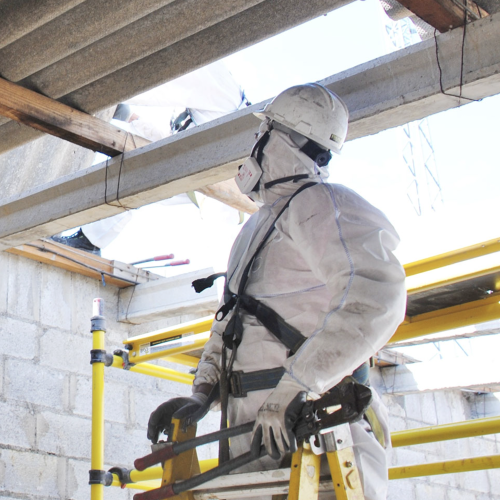
Defined as the uncontrolled growth of abnormal lung cells, lung cancer is often fatal when diagnosed in later stages. Lung cancer poses a severe threat to public health in the United States, particularly among high-risk occupational groups.1 Construction workers represent a vulnerable yet frequently overlooked population due to routine exposure to occupational carcinogens, such as asbestos, silica, and diesel exhaust. Without intervention, these exposures can lead to poor survival outcomes, reduced quality of life, and substantial financial burdens. Furthermore, many workers lack health insurance, which delays care and exacerbates economic hardship. Socially vulnerable populations, including minorities and undocumented laborers, face additional barriers such as stigma and limited healthcare access.
This report examines lung cancer among construction workers nationwide and in Cincinnati, Ohio, a city with aging infrastructure and ongoing renovation projects. Key public health determinants, including workplace safety, healthcare access, and socioeconomic disparities, were analyzed to inform a targeted, evidence-based intervention. The research addresses four main objectives: (1) identifying the occupational and systemic factors that lead to lung cancer in construction workers, (2) comparing Cincinnati trends to national trends, (3) examining barriers that hinder early detection and treatment, and (4) exploring the role of technology and local partnerships to improve outcomes.
The Importance of a Public Health Lens
Examining lung cancer among construction workers solely from a clinical perspective frequently overlooks social and environmental factors. A public health perspective is therefore essential to address risk factors, promote prevention, provide education, facilitate early detection, and advocate for policy reform. Achieving these goals requires collaboration between healthcare providers, occupational safety organizations, policymakers, and community leaders.
The socio-ecological model (a framework that examines an issue from the individual, interpersonal, institutional, community, and policy level to create effective, holistic solutions) was applied to address multiple factors affecting lung cancer risk in construction workers. At the individual level, a lack of access to healthcare and education disadvantages workers. On the interpersonal level, peer norms may discourage use of protective equipment or make workers hesitant to voice health concerns, particularly in environments that value toughness over self-advocacy. Organizational factors, such as poorly enforced safety measures and a lack of health benefits, leave workers unsupported. Community-level conditions, including aging infrastructure and limited access to healthcare facilities, make regular health maintenance challenging. Furthermore, current legislation fails to hold systems accountable at the policy level, despite well-documented risks. Taken together, the socio-ecological model suggests that lung cancer disparities among construction workers are rooted in structural patterns that intentional, layered, and equity-focused public health efforts can address.
Methods
A literature review was conducted to understand the determinants that increase the risk of lung cancer in construction workers at the local and national levels. Sources were gathered from PubMed, Google Scholar, and other academic databases. Specifically, articles that discussed the risk factors and more profound disparities in the treatment of lung cancer among construction workers were examined. Articles that investigated other cancers, focused on non-occupational risks, or were conducted outside the scope of the paper were excluded. In total, 31 articles were incorporated in this review.
Stakeholders, representing perspectives from grassroots organizations to policy-level agencies, were contacted to gain a deeper understanding of lung cancer. Of the 24 individuals contacted, one agreed to participate in an interview. Key questions surrounded company protocols and interorganizational collaborations. The interview was transcribed and synthesized into a cohesive document.
Insights from both the literature review and stakeholder interview informed the design of a plan of action to aid construction workers. Potential intervention strategies were brainstormed and consolidated into a structured one-year plan.
National Literature Review
Although the national survival rate has increased from 26.4% to 28% in the past 5 years, lung cancer still affects an estimated 226,600 people and contributes to 124,730 deaths in 2025 alone.1 Individuals of higher socioeconomic standing typically have a 5-year or longer survival rate.2 Among those at risk, African American populations have the highest mortality rate, with 50.2 deaths per 100,000 men and 27.8 deaths per 100,000 women annually, while non-Hispanic White populations have a lower mortality rate of 35.1 deaths per 109,126.3 People aged 65 and older are at the highest risk for lung cancer; however, lung cancer incidence has risen notably among individuals over 40.1
Several factors have contributed to the rise of lung cancer in the United States. Current United States Preventive Services Task Force guidelines recommend screening for patients aged 50-80 with a smoking history of 20 years or more4, which excludes other vulnerable populations, including younger individuals. Financial barriers further limit access to the best lung cancer services.5 Additionally, misinformation, language barriers, and rural geography impede appropriate screening for lung cancer among vulnerable populations.2 Research also indicates that up to 15% of the approximately 150,000 annual lung cancer deaths in the United States are attributable to hazardous occupational exposures.6 Collectively, these social and structural determinants exacerbate disparities in lung cancer risk and treatment.
Justification for Target Population
Cincinnati has a high concentration of renovation and demolition construction projects, which exposes construction workers to hazardous materials such as asbestos and silica dust, increasing their risk for developing lung cancer. Data from the Health and Retirement Study indicate that construction workers are twice as likely to die from lung cancer compared to white-collar workers.7 Given Cincinnati’s aging infrastructure and the large workforce involved, the city represents a critical location for targeted intervention.
Lung cancer poses a significant public health concern in Cincinnati and throughout Hamilton County. The age-adjusted lung cancer incidence rate of 63.2 cases exceeds the national average of 53.3 cases.8 Neighborhoods, such as Lower Price Hill and Avondale, experience disproportionately high rates of lung cancer9, driven by limited health insurance coverage, aging infrastructure, and racial and educational disparities. Uninsured rates in some areas can reach 18%, and low screening rates make early detection less likely.10 60% of Hamilton County homes were built before 1970, a period when asbestos use was widespread.11 Black men experience higher lung cancer mortality due to later-stage diagnoses and restricted access to treatment12. Hispanic and undocumented workers are also disproportionately affected, as they are more likely to work for smaller contracting companies that lack benefits. Additionally, individuals with lower educational attainment are more likely to be employed in jobs with airborne exposures.13 As a result, specific ZIP codes within Cincinnati bear a significantly higher burden of lung cancer.
Construction workers in Cincinnati face several individual barriers to lung cancer prevention. In addition to elevated smoking rates14, construction workers in Hamilton County often lack health benefits, face unaffordable insurance costs, and receive inadequate safety training.10, 15 Low wages and job insecurity further prevent workers from taking time off for medical appointments. Nationally, 88% of workers struggle to meet basic needs16, contributing to poor nutrition, limited exercise, and chronic stress. These intersecting personal and systemic challenges significantly hinder workers’ ability to maintain long-term health.
Interpersonal and cultural factors also shape lung cancer risk among construction workers. Dement et al. (2020) observed that workers with abnormal lung function frequently delayed care due to stigma, even when symptoms were concerning for lung disease or cancer.17 Family members may also be unaware of the occupational hazards associated with construction work and may not encourage routine medical screenings. Following a diagnosis, families often experience distress, caregiver burnout, and financial strain.18 Peer culture within construction trades further reinforces risk behaviors. Bricklayers and roofers, for instance, showed higher lung cancer rates compared to other construction workers. Worksite norms to “skip the mask, tough it out,” or avoid protective equipment contribute to prolonged exposure to carcinogens.19 Strengthening social support networks is essential for disrupting these cycles.
Organizational barriers within Cincinnati’s construction industry further exacerbate risk. Although the Occupational Safety and Health Administration’s (OSHA) 2016 silica rule limits breathable silica dust and emphasizes engineering controls, few construction sites measure silica dust, use HEPA vacuums, or conduct inspections routinely.20 IARC’s 2001 pooled analysis also confirmed a clear dose-response relationship between silica exposure and lung cancer.21 Despite this evidence, many small construction firms in Ohio continue to bypass engineering controls and medical surveillance. For example, a 2014 OSHA citation in Piqua, Ohio, documented workers inhaling silica dust without adequate personal protective equipment (PPE).22 These findings highlight the need for stronger enforcement and organizational commitment.
At the community level, Cincinnati offers several resources to support individuals suffering from lung cancer. TriHealth offers a free 12-week Cancer Wellness Program designed to motivate patients to exercise.23 Participation in structured exercise programs has been shown to enhance physical resilience and psychological well-being. Additionally, the Cancer Support Community (CSC) offers free, online services that extend beyond clinical treatment plans.24 CSC’s flexible and accessible programming is particularly beneficial for construction workers, who may face barriers to care.
At the policy level, Ohio has enacted regulations to ensure proper compliance with procedures to prevent lung cancer. Part F of the Ohio Administrative Code, Rule 3701-4-01, mandates that companies monitor malignant diseases, conduct epidemiologic studies, and improve work conditions.25 However, gaps remain. The Ohio Asbestos Bill (Senate Bill 63) shields companies from asbestos-related lawsuits by imposing strict documentation requirements on workers.26 Claimants must provide detailed evidence (e.g., worksite histories, product names, dates, and witnesses) within 60 days of filing or risk case dismissal. Repealing or revising this legislation could improve access to justice for construction workers harmed by occupational exposures.

Table 1: Overview of Lung Cancer Programs for Construction Workers in Cincinnati, Ohio
Stakeholder Perspectives
One stakeholder was conducted with Mr. Edward Cunningham, Deputy Director of the City of Cincinnati Inspections. Mr. Cunningham offered a unique perspective on the construction industry, drawing on his extensive career with various construction and building maintenance projects since high school. He highlighted several challenges construction workers face, such as insufficient safety regulations, limited enforcement authority within the Health Department, and the occurrence of fatalities. He also explained the role of organizations such as the Environmental Protection Agency (EPA) in implementing and overseeing safety. Mr. Cunningham further identified occupational hazards not initially emphasized in the literature review, particularly the dangers of lead paint. He noted that many older buildings contain an abundance of this paint, which may contribute to increased lung cancer risk. His insights underscored the importance of achieving health equity, asserting that workplace safety should not be treated as a privilege. He stressed that regardless of background, immigration status, or other political factors, everyone is entitled to basic safety and security. He emphasizes that protecting human life should take precedence over everything else.
Digital Health Solutions
The Quintuple Aim Model emphasizes prioritizing healthcare in five key categories: improving patient experience, enhancing patient experience, reducing costs, improving healthcare providers’ experiences, and advancing health equity. This model presents a comprehensive approach to healthcare, illustrating how each factor influences the others. This approach can ensure that lung cancer care is accessible to construction workers, a population often overlooked.
Over time, technology has become a critical component in healthcare. To continue improving healthcare, technological solutions and disparities must be addressed. Population health can be improved through social media by raising awareness and increasing education. The most cost-effective approach would be to encourage companies to offer customized healthcare benefits tailored to specific job roles or occupations. Additionally, telehealth can enhance patient experience, improve healthcare providers’ experiences, and advance health equity by making it easier for patients to consult a doctor, enabling healthcare professionals to reach more patients, and providing access to care in healthcare deserts.

Table 2: Quintuple Aim Model – Lung Cancer Treatment in Construction Workers in Cincinnati
Plan of Action
Lung cancer remains a serious public health concern in the U.S. Although treatments and survival rates have improved modestly, construction workers continue to face higher risks due to their hazardous living and working environments, limited access to affordable healthcare, and inadequate protection.5 In response, this intervention aims to ensure that all construction workers have access to quality healthcare and are protected on the job regardless of citizenship status. Key objectives include educating at least 50 workers about occupational hazards, distributing toolkits through trade unions, and partnering with at least one company to provide free, routine lung cancer screenings. This intervention seeks to expand upon previous programs by reaching undocumented and non-union workers through broader partnerships and by emphasizing accessibility.
The first quarter of the plan of action will involve fundraising through various means, including back-to-school raffles, homecoming events, and trunk-or-treats at high schools in the Cincinnati metropolitan area. From August to September, flyers will be used to disseminate information about these events. Organizations such as OSHA, the EPA, and relevant trade unions would be contacted about the mission. Follow-up communication will be conducted with any organizations that did not respond. In October, educational workshops for the general public on the risks of lung cancer in construction workers will be held. Additionally, outreach will begin with the American Lung Cancer Screening Initiative (ALCSI) to coordinate screenings for construction companies that currently lack such services.
The second quarter of our intervention spans from November to January. We will continue fundraising, with an emphasis on holiday-themed events, which are expected to generate a significant portion of the funds for the final two quarters. During this period, physicians and occupational health experts will be recruited to participate as speakers at workshops. A project website and social media platforms will also be launched to share information about the mission, workshops, and fundraising activities with the public. The goal is to establish a partnership with at least one trade union to facilitate future educational workshops. In January, a team checkpoint will be conducted to assess progress and consider next steps.
The third quarter of our intervention spans February to April. We will continue with fundraising, this time focusing on school-specific events to maximize participation and support. Beginning in February, safety workshops will be hosted at Voice of America Park to educate construction workers on preventive measures, early warning signs, and accessible healthcare resources related to lung health. Each workshop will provide take-home materials, including PPE, with pre- and post-event surveys to gather feedback and guide future improvements. Recruitment will begin in March to further expand outreach efforts. Ongoing updates will be shared through the website and social media platforms, and collaboration with the ALCSI will continue to support the implementation of free lung cancer screenings in targeted companies.
During the final quarter of our intervention from May to July, we will continue fundraising, with a focus on end-of-school events for graduating seniors. In May, the final workshop will be held as both an educational session and a celebration of milestones, featuring guest speaker reflections, participant testimonials, and a summary of the initiative’s impact. In June, a final team checkpoint will be conducted to assess progress, document accomplishments, and compile survey data. These findings will inform decisions regarding future direction, partnerships, and integration into existing community health programs. Finally, in July, a meeting with volunteers will be held to support the continuation of the intervention, with a continued focus on fundraising and workshops. Ultimately, this initiative aims to create a lasting impact by empowering construction workers with knowledge, resources, and access to healthcare, fostering a culture of prevention and long-term health awareness.
Discussion
A key strength of this intervention lies in its community-based framework. Partnering with trade union allies, the program aims to reach construction workers through established networks, thereby increasing relevance and trust. The intervention also incorporates workshops specifically tailored to educate on worksite safety procedures. Measurable objectives include engaging at least fifty construction workers and partnering with at least one trade union. Additionally, the intervention is community-focused from its earliest stages, fostering public awareness through direct engagement. For instance, fundraising activities involve face-to-face interactions with the community, which can generate not only financial funding but also opportunities for partnerships and sponsorships that enhance the project’s long-term sustainability.
Despite these strengths, several limitations warrant consideration. Fundraising efforts may be insufficient to fully cover the costs of education materials and screening services. Communication and coordination challenges may arise due to varying points of contact among trade unions, keynote speakers, and partner organizations. Educational workshops may also have a limited impact if attendance is low or if participants choose not to engage fully. Finally, the implementation of free lung cancer screenings depends largely on individual company protocols; in some cases, existing employer-sponsored testing may reduce the perceived need for additional screenings.
Overall, the initiative demonstrates a strong potential to address occupational lung cancer through preventive education, increased access to screening, and community collaboration. However, its effectiveness will depend on sustained stakeholder engagement, consistent worker participation, and employer cooperation to achieve a lasting public health impact.
Concluding Remarks
Construction workers experience an elevated risk of lung cancer due to frequent occupational exposures, immigration status-related vulnerabilities, and persistent barriers to protection, early detection, and treatment. Prioritizing lung cancer education, access to free screenings, and culturally sensitive outreach within targeted interventions can provide long-term support for construction workers across the United States to increase awareness and advance prevention. Future research initiatives may investigate disparities in the treatment of non-unionized, unionized workers, and immigrant workers compared to regular workers. Further data collection is necessary to evaluate the effectiveness of grassroots initiatives in supporting these marginalized groups.
References
- American Cancer Society. Lung Cancer Statistics | How Common is Lung Cancer? www.cancer.org https://www.cancer.org/cancer/types/lung-cancer/about/key-statistics.html (2023).
- Kurzrock, R. et al. Healthcare disparities, screening, and molecular testing in the changing landscape of non–small cell lung cancer in the United States: a review. Cancer and Metastasis Reviews 43, (2024). https://link.springer.com/article/10.1007/s10555-024-10187-6.
- American Lung Association. Lung Cancer’s Impact on Black Men and Women. https://www.lung.org/getmedia/87a67675-a8ff-450f-bc82-f9a4631c84cd/infographics-lung-cancer-and-black-men-final.pdf.
- Krist, A. H. et al. Screening for lung cancer: US preventive services task force recommendation statement. JAMA 325, 962–970 (2021). https://jamanetwork.com/journals/jama/fullarticle/2777244.
- American Lung Association. Key Findings. www.lung.org https://www.lung.org/research/state-of-lung-cancer/key-findings (2024).
- ImpactLaw. Lung Cancer High Risk Jobs. impactlaw.com https://www.impactlaw.com/asbestos-mesothelioma/lung-cancer/high-risk-jobs/ (2025).
- CPWR | Construction Chart Book. CPWR | https://www.cpwr.com/research/data-center/the-construction-chart-book/.
- Ohio Department of Health. Hamilton County Cancer Profile 2025. https://odh.ohio.gov/wps/wcm/connect/gov/c4fbe0cd-0d20-481f-bbe2-d62c3892aeac/Hamilton+County+Cancer+Profile+2025.pdf?MOD=AJPERES&CONVERT_TO=url&CACHEID=ROOTWORKSPACE.Z18_79GCH8013HMOA06A2E16IV2082-c4fbe0cd-0d20-481f-bbe2-d62c3892aeac-prZD1f-.
- City of Cincinnati Health Department. 2023-2028 Community Health Assessment. https://www.cincinnati-oh.gov/sites/health/assets/Documents/Cincinnati-Health-Department-2022-Community-Health-Needs-Assessment-data-update.pdf.
- Tolbert, J., Drake, P. & Damico, A. Key facts about the uninsured population. KFF https://www.kff.org/uninsured/key-facts-about-the-uninsured-population/ (2023).
- Hamilton County Housing Action Plan Team. Hamilton County Data Profile. https://www.lisc.org/media/filer_public/30/00/30003946-ff25-42d0-b7f3-a2d50878f515/ham_co_summary_2021_numbers-_data_summary_package.pdf (2023).
- Saka, A. H. et al. Cancer statistics for African American and Black people, 2025. CA: A Cancer Journal for Clinicians 75, 111–140 (2025).
- Gandhi, S. A., Heinzerling, A., Flattery, J., & Cummings, K. J. Occupational Contributions to Respiratory Health Disparities. Clinics in Chest Medicine 44, (2023).
- American Lung Association. Top 11 Populations Disproportionately Affected by Cigarette Smoking and Tobacco Use | State of Tobacco Control | American Lung Association. www.lung.org https://www.lung.org/research/sotc/by-the-numbers/top-10-populations-affected (2025).
- Alsharef, A., Albert, A., Jaselskis, E. & Bhandari, S. Construction Safety Training: Barriers, Challenges, and Opportunities. Construction Research Congress 2020 547-555 (2020) doi:https://doi.org/10.1061/9780784482872.059.
- Majority of US employees worried about meeting basic costs, WTW survey finds. WTW https://www.wtwco.com/en-us/news/2024/06/majority-of-employees-worried-about-meeting-basic-costs-wtw-survey-finds.
- Dement, J. M., Ringen, K., Hines, S., Cranford, K. & Quinn, P. Lung cancer mortality among construction workers: implications for early detection. Occupational and Environmental Medicine 77, 207–213 (2020). https://oem.bmj.com/content/77/4/207.
- Tragantzopoulou, P. & Giannouli, V. Echoes of Support: A Qualitative Meta-Synthesis of Caregiver Narratives in Lung Cancer Care. Healthcare 12, 828 (2024). https://www.mdpi.com/2227-9032/12/8/828.
- Lacourt, A., Pintos, J., Lavoué, J., Richardson, L. & Siemiatycki, J. Lung cancer risk among workers in the construction industry: results from two case–control studies in Montreal. BMC Public Health 15, (2015). https://link.springer.com/article/10.1186/s12889-015-2237-9.
- OSHA. Controlling Silica Exposures in Construction. https://www.silica-safe.org/pdf/OSHA-Controlling-Silica-Exposure-in-Construction.pdf.
- Steenland, K. et al. Pooled exposure–response analyses and risk assessment for lung cancer in 10 cohorts of silica-exposed workers: an IARC multicentre study. Cancer Causes and Control 12, 773–784 (2001). https://link.springer.com/article/10.1023/A:1012214102061.
- U.S. Department of Labor. OSHA News Release: US Department of Labor’s OSHA cites Piqua Champion Foundry for repeat, serious violations [07/17/2014]. DOL https://www.dol.gov/newsroom/releases/osha/osha20140717 (2025).
- Support Services | TriHealth. Trihealth.com https://www.trihealth.com/services/cancer-and-blood-care/support-and-resources/care-wellness-and-support/support-services (2025).
- About Us – Cancer Support Community. Cancer Support Community https://mycancersupportcommunity.org/about-us/ (2023).
- Ohio Laws & Administrative Rules. Rule 3701-4-01 – Ohio Administrative Code | Ohio Laws. Ohio.gov https://codes.ohio.gov/ohio-administrative-code/rule-3701-4-01 (2021).
- May, M. Ohio Asbestos Bill That Could Affect People with Mesothelioma. Lung Cancer Center https://www.lungcancercenter.com/news/ohio-asbestos-bill/ (2025).
- 27. CPWR. CPWR Building Trades National Medical Screening Program. CPWR https://www.cpwr.com/service/medical-screening/ (2024).
- American Lung Cancer Screening Initiative. ALCSI https://www.alcsi.org.
- UC Health. Lung Cancer Screening. UC Health https://www.uchealth.com/en/treatments-and-procedures/lung-cancer-screening (2025).
- Occupational Safety and Health Administration. Training | Occupational Safety and Health Administration. www.osha.gov https://www.osha.gov/training.
- ActOhio. Greater Cincinnati Building & Construction Trades Council. ACT Ohio https://www.actohio.org/building-and-construction-trades-councils/greater-cincinnati-bctc/ (2024).
Related Posts

Concierge Medicine Could Reduce Senior Health Inequities in Illinois
This publication is in proud partnership with Project UNITY’s Catalyst Academy 2023...
Read More
Investigating Obstructive Sleep Apnea (OSA) in African and Latin Americans from Chicago
This publication is in proud partnership with Project UNITY’s Catalyst Academy 2024...
Read More
Transgender Health Disparities in Prisons
Transgender people are targets for victimization within the prison system...
Read More
Addressing Medical Inequities in Healthcare Professional Deserts
This publication is in proud partnership with Project UNITY’s Catalyst Academy 2023...
Read More
Caribbean History through Genetics and Archaeology
Figure 1: A map of the Caribbean Islands from 1894...
Read More
How the Bystander Effect on Security Robots can Hamper Law Enforcement
BigDog robots being tested under the supervision of a Boston...
Read MoreDarius Dastur, Mishal Ali, Harshitha Ezhilarasan, Hasan Khan, Aaron Akasala