
This publication is produced in partnership with Project UNITY’s Catalyst Academy Class of 2025, a student public health research and education program.

Abstract
Cardiovascular disease (CVD) is the leading cause of death in the United States (CDC, 2024). Elderly Chicanx populations in San Diego experience significantly higher CVD incidences and mortality rates than white populations because of systemic barriers, social determinants of health (SDOH), and other outside factors. This project focuses on examining how CVD occurring in elderly Chicanx populations is constructed at the individual level of the socioecological model. Using national and regional data, as well as stakeholder feedback, we propose a free, four-month motivational interviewing intervention targeting elderly Chicanx residents. The program will be guided by goals related to making lifestyle changes across physical activity, diet, and substance use via in-person and virtual counseling sessions. Our work is rooted in the Quintuple Aim framework and takes advantage of the digital revolution in health in order to address CVD prevalence in Chicanx elderly residents.
Keywords: Cardiovascular disease (CVD); cardiovascular health; public health; San Diego; elderly; digital health
Introduction
CVD can lead to life-altering complications or death if left untreated. CVD refers to a range of heart conditions that damage the heart and blood vessels over time. Hispanics/Latinos, the second largest U.S. ethnic minority, face disproportionately high rates of cardiovascular disease: 71% of Hispanic women and 80% of Hispanic men overall had at least one risk factor, like high blood pressure, high cholesterol, or diabetes (Quality of Life, n.d). For many older Chicanx, these risks stem from more reasons besides age. Challenges such as food insecurity, limited health education (Alba, 2016), language barriers, and low trust in the medical system have made it more difficult to identify and manage severe conditions (Calo, 2015). Existing programs such as Live Well San Diego offer resources, but their English-language materials and non-culturally familiar settings face limitations in effectiveness. Older Chinanx adults who are more likely to depend on bilingual support as well as community-based outreach may not feel accessible or welcome. Addressing these gaps has the power to reduce CVD risk early on and improve generational quality of life for a population too frequently overlooked.
Public Health Lens
CVD and its risk factors (e.g., diabetes, hypertension, and inactivity) are heavily determined by individual lifestyle choices, the environment, and overall SDOHs such as exposure to second-hand smoking, diet, financial well-being, built environment, healthcare access & quality, etc (Zarghami et al., 2025; Yu et al., 2018). Another model of public health perspective is the social-ecological model (SEM), which aims to address the social aspects of an individual’s environment and how they influence health outcomes at various levels, including individual, interpersonal, institutional, community, and policy. A public health lens aims to address these underlying influences to ameliorate its negative health outcomes.
For example, homelessness is a challenge that comprises several levels of the SEM and SDOHs, encompassing struggles with economic stability and access and quality of health care, and exacerbating CVD prevalence as a result. Interventions aimed at reducing homelessness and improving healthcare resource navigation have shown to increase primary care utilization and reduce emergency department visits as well as CVD risk by approximately 39% (Korukonda et al., 2025). This confirms the necessity of a public health lens to analyze solutions to medical issues beyond a clinical perspective and into the individual aspects of patients’ lives, to address prevalent health conditions like CVD.
Methodology
A literature review of 38 articles was conducted. Articles were sourced from scholarly databases, including PubMed, PubMed Central, and the ProQuest platform, as well as peer-reviewed journals such as the Journal of the American College of Cardiology (JACC). Additional sources included government databases—such as the Centers for Disease Control and Prevention (CDC), the Food and Drug Administration (FDA), and San Diego County government resources—and reputable organizations including Million Hearts, Live Well San Diego, and Statista Atlas.
To gain more in-depth, professional opinions, twenty-one stakeholders were contacted across different organizations and specialties related to CVD in San Diego. Of those stakeholders, three expressed interest in collaborating in an online meeting, conducted via Zoom, to further discuss their perspectives on the issue. Ultimately, the information gathered has enabled our team to synthesize several proposed solutions for reducing CVD prevalence among San Diego Chicanx/Latinx elderly.
Literature Review
CVD is a growing public health concern in the United States, consistently standing as the leading cause of mortality in the U.S., as affirmed by the Centers for Disease Control and Prevention, causing 702,880 deaths in America in 2022 (CDC, 2024). Over eight million Californians are living with at least one of the most common forms of cardiovascular disease, which are heart disease, heart failure, stroke, or high blood pressure, which is a major risk factor for heart disease and stroke. (Hispanic Heart Health, 2024).
Among these statistics, Hispanics are to be especially vulnerable as compared to non-Hispanic whites: even more so when considering how Hispanics are often more vulnerable both in SDOHs and CVD risk factors like chronic conditions such as diabetes, hypertension, and obesity (Balfour et al., 2016; Rodgers et al., 2019). 1 in 6 Chicanx with CVDs live in poverty in the U.S., limiting their access to healthcare and exacerbating CVD outcomes (Bohn et al., 2019). Sociocultural factors such as poor health literacy, language barriers, and differing perspectives on Western medicine may delay key medical interventions.
Justification for the Target Population
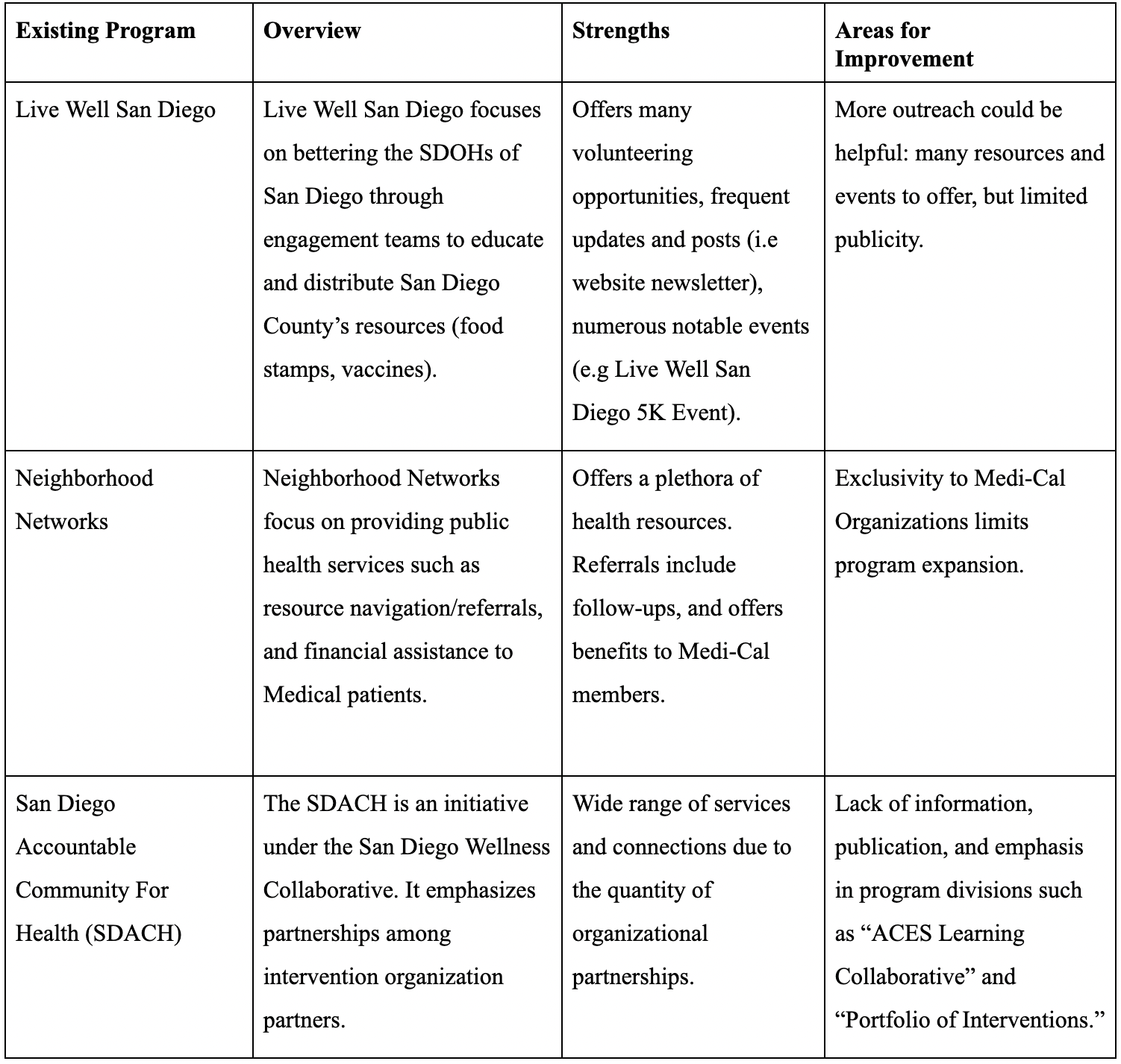
Table 1: Existing San Diego CVD Reduction Programs
Stakeholder Perspectives
The insights and observations of all three of our interviewed stakeholders confirm the findings of our literature review: that the American Chicanx population faces greater challenges related to SDOHs and CVD risk factors in areas like San Diego, as well as the significance of cultural and language barriers. Another common emphasis among all three professionals, which we had not previously considered, was the importance of implementing culturally appropriate public health strategies. Both the representative of the Institute of Chicanx Psychology and Professor Rosanna Alvarez of Chicana & Chicano Studies agreed that many aspects of traditional Chicanx culture are healthy, including their tradition of family activities and cuisine. Therefore, all suggested that an intervention focusing on this population should implement existing qualities of traditional Chicanx culture.
Digital Health Solutions
To address the need for improvement in equitable access to healthcare, the Quintuple Aim builds on the Triple and Quadruple Aim (Gould, 2022) to emphasize inclusion and serving the population. The Quintuple Model consists of five main objectives. Improving population health, enhancing the patient experience, reducing costs, improving healthcare providers’ experiences, and advancing health equity (Interwell Health, 2024). We apply the Quintuple Model to understand how digital health tools, such as remote patient monitoring and telehealth— which increase remote accessibility and cost efficiency—can manage chronic conditions like cardiovascular disease (Martin R Cowie et al., 2021; Kuan et al., 2022; Sarah Raes et al., 2024).
The current technical shift towards the digital transformation of health care systems has experienced a clear shift in the last few years, leading to improvements in cardiovascular patient care, accessibility, and cost reduction (Breitschwerdt, R. 2023). Digital solutions can also address health illiteracy and language, and access to proper transportation to visit a physician in person.
Chronic diseases such as heart failure have a huge health economic importance because of their high mortality. Telemedicine offers a unique opportunity to replace crucial in-person visits, such as with the use of wearable technology, mobile apps, and telemedicine (Stremmel, C., & Breitschwerdt, R., 2023). These digital tools can improve individual engagement and adherence through accessible personalized instructions, real-time monitoring, and remote consultations, making it easier to manage and access their cardiovascular health (Wu. A et al., 2025).
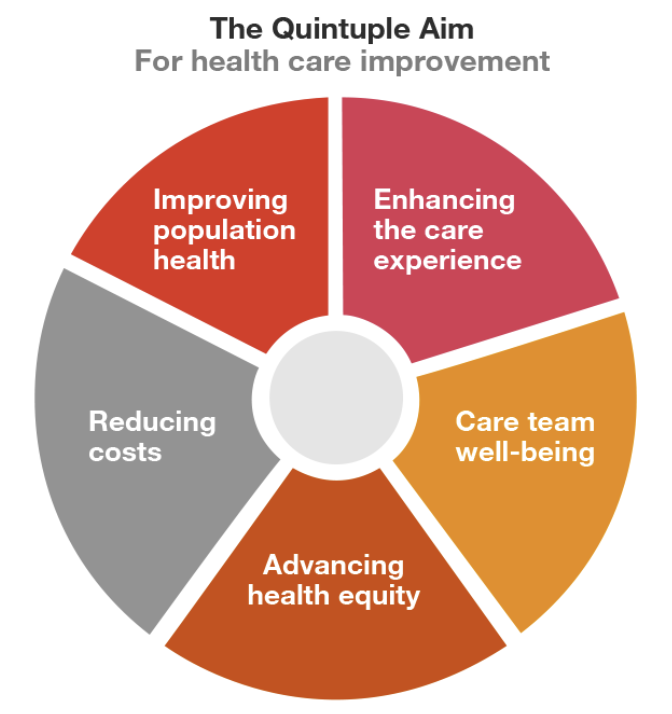
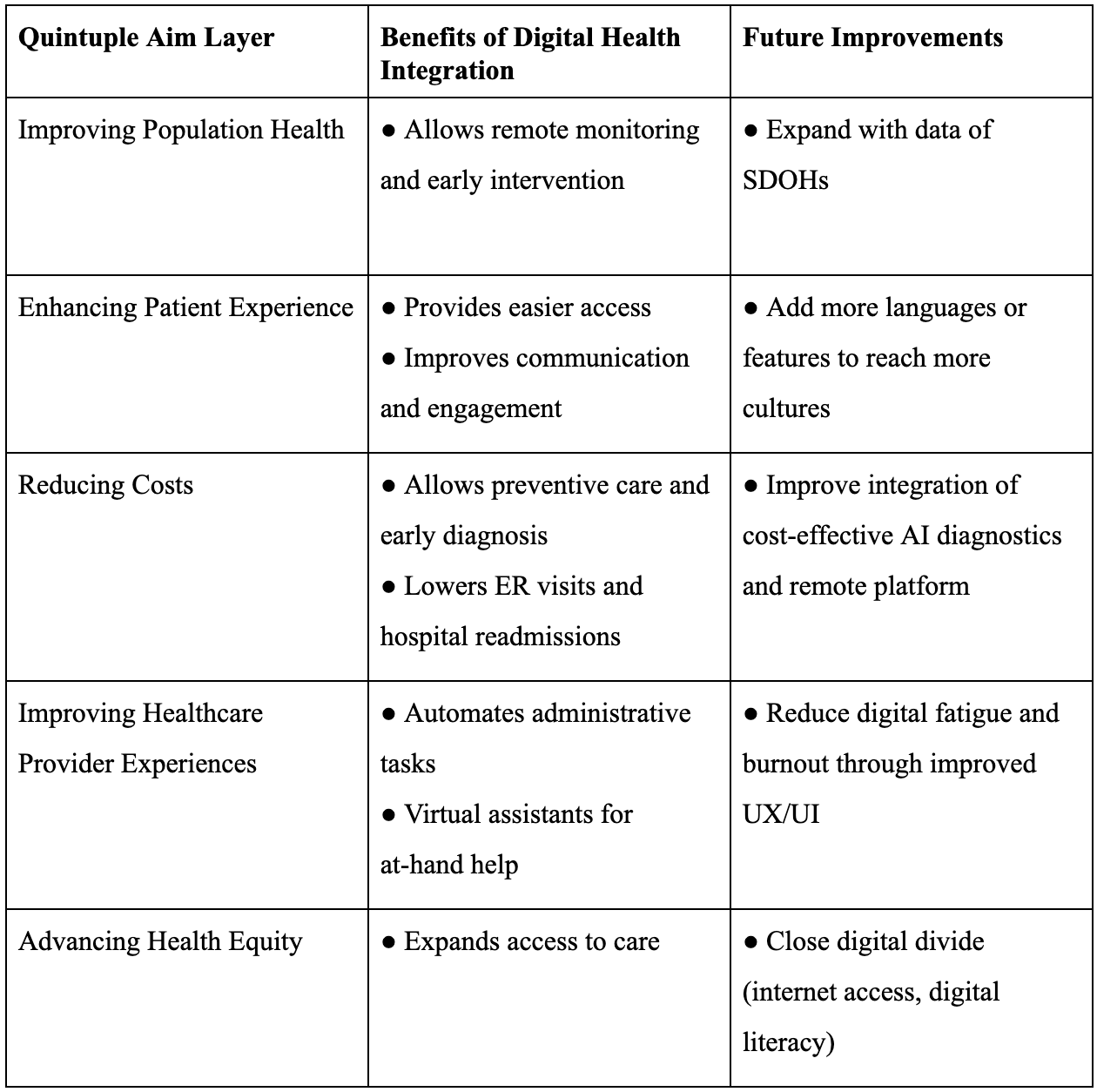
Table 2: Quintuple Aim of Healthcare
Plan of Action
The intervention’s main objective is to encourage and ultimately increase the adoption of healthier lifestyles among elderly Chicanx San Diego residents aged 50 or older; however, our strategy’s applicability is not necessarily limited to San Diego or Chicanx people. We aim to address CVD risk by focusing on three major lifestyle factors that contribute to CVD risk: adequate and proper physical activity, a balanced diet, and substance use. Our plan is centered around a 4-month motivational-interviewing program, a program that consists of weekly health meetings—offered virtually and in-person to increase accessibility—between health professionals and clients to monitor and motivate clients on their path towards self-improvement, which may include nutritional, exercise, or substance or alcohol reduction practices. These weekly meetings aim to motivate clients in their lifestyle changes and effectively maintain their accountability on their health improvement journey and sustainability.
This intervention will take place from January to March, with a period of fundraising that includes searching for project grants, local and federal government assistance, local business collaborations, and individual donations (both online and in-person). We will also address our need for venues and suitable meeting locations by reaching out to managers of suitable locations (such as vacant classrooms, community centers, etc.), saving operating costs and making effective use of available resources. The funds we collect during this period will be used to purchase equipment for venues and provide salaries for the participating healthcare professionals.
With sufficient collected funding, we will seek out health counselors and professionals from sources and institutions such as the Institution of Chicanx Psychology & Community Wellness from April through May to secure both in-person and online counseling services for our program.
June will consist of committee and health professional meetings to facilitate cohesion and clarity in tasks and standards for client meetings and venue management. In the same month, we will conduct a period of vigorous publicity and advertising using several methods, such as booths and representatives in public spaces ( including markets, parks, and public events), social media, and physical flyers, brochures.
By July, we will officially open our services and begin our counseling sessions, which will run until the end of October. This will include a large orientation for all participants to launch the program. Throughout these months, we will hold weekly to biweekly meetings with all counselors to evaluate progress, strengths, and difficulties faced, and work towards improving at every meeting.
Once the four-month intervention period is over, we will survey our clients through interviews and questionnaires, as well as assess their improvement in the three areas of cardiovascular health: physical activity, diet, and substance abuse. With feedback from clients, we will conduct a two-month evaluation period with all counselors and the intervention committee to analyze the effectiveness of the intervention.
Project UNITY was the program that first galvanized the formation of our research team and intervention, and it can continue to offer guidance and counseling to our team. Moreover, Project UNITY can continue to aid in the outreach to stakeholders, collecting valuable and professional insights and data. Finally, Project UNITY could be an excellent source for publication, advertising, and overall public outreach for intervention efforts.
Strengths and Limitations
One of the program’s biggest strengths is accessibility both in person and online with weekly virtual meetings with professionals working in the health industry. For this approach, we will also be making it cost-free in order to cater to low-income families who have trouble accessing the proper medicare. A limitation may be the resource-intensive nature of the program, which includes devices and bilingual professional staff. Additionally, our program indirectly helps the population, and systemic factors such as our program indirectly helps the population and systemic factors such as air pollution will remain, which plays a major factor in CVD.
Discussion
San Diego’s elderly Chicanx often are disadvantaged in both Social Determinants of Health (SDOH), (including housing stability and quality of life) as well as risk factors associated with aging. We took a community-centered effort and a multidisciplinary approach using the Quintuple Aim Model and digital health to reduce CVD risk by taking a unique approach to engaging clients. Our intervention was a motivational interviewing-based program , in which CVD health counselors tracked clients’ behaviors in three key focus areas— diet, physical activity, and substance use behaviors. The clients have weekly virtual meetings over four months to help facilitate accountability and promote behavior change.
We envision the Quintuple Aim to improve the healthcare worker experience by reducing burnout through enabling remote participation and potentially allowing for fair payment or commission based on fundraised amounts. In addition, as we continue to aim for health equity and cost savings, we have structured the program to be free of charge to participants. Moreover, our funds will allow us to equip clients with free digital devices that are necessary for remote sessions, which eliminates the possible technology-related barriers related to care.
To strengthen the sustainability and adaptability of this intervention, we will conduct annual evaluations with the participants, counselors, and committee members. These meetings will facilitate constructive feedback, and articulate possible improvements to the intervention next time. We believe that through any cultural responsiveness, we will provide the means necessary to uniquely address and significantly reduce the CVD risks of the older Chicanx segment of the population living in San Diego.
Conclusion
As affirmed by both our scoping literature review and interviews with several relevant professionals, CVD is a significant health issue amongst Elderly Chicanx over the age of 40 in San Diego. They are one of the highest ethnic groups to be prone to the disease. Thousands of Hispanics suffer from at least one CVD risk factor. Those in unprivileged communities often struggle with financial problems, language barriers, and limited access to healthcare. Our intervention will be free of charge and will support the Chicanx community in San Diego to reduce CVD by restyling their daily life habits. Examples include prioritizing physical activity, hosting interactive wellness clubs, reducing substance abuse, and modifying diet. Our intervention involves hosting weekly motivational meetings both online and in person. By addressing the key factors which are the foundation to CVD development, we hope to increase our patients’ healthful autonomy and ultimately reduce its prevalence.
References
- Alba, A. D., Britigan, D. H., Lyden, E. & Johansson, P. Assessing health literacy levels of Spanish-speaking Hispanic patients in Spanish at federally qualified health centers (FQHCs) in the Midwest. J. Health Care Poor Underserved 27, 1726–1732 (2016). https://doi.org/10.1353/hpu.2016.0158
- Balfour, P. C., Ruiz, J. M., Talavera, G. A., Allison, M. A. & Rodriguez, C. J. Cardiovascular disease in Hispanics/Latinos in the United States. J. Latina/o Psychol. 4, 98–113 (2016). https://doi.org/10.1037/lat0000056
- Bohn, S., Danielson, C., Kimberlin, S., Malagon, P. & Wimer, C. Poverty in California. Public Policy Institute of California (2019).
- Calo, W. A. et al. Experiences of Latinos with limited English proficiency with patient registration systems and their interactions with clinic front office staff: an exploratory study to inform community-based translational research in North Carolina. BMC Health Serv. Res. 15, (2015). https://doi.org/10.1186/s12913-015-1235-z
- Centers for Disease Control and Prevention. Million Hearts®. (CDC, 2020).
- Centers for Disease Control and Prevention. FastStats – Heart Disease. (CDC, 2024).
- Centers for Disease Control and Prevention. Current cigarette smoking among adults in the United States. (CDC, 2024).
- Centers for Disease Control and Prevention. Heart Disease Facts. (CDC, 2024).
- Chwał, J. et al. Analysis of demographic, familial, and social determinants of smoking behavior using machine learning methods. Appl. Sci. 15, 4442 (2025). https://doi.org/10.3390/app15084442
- Cowie, M. R. & Lam, C. S. P. Remote monitoring and digital health tools in CVD management. Nat. Rev. Cardiol. 18, 457–458 (2021). https://doi.org/10.1038/s41569-021-00548-x
- Gould, K. A. Equity: Introducing the Quintuple Aim. Dimens. Crit. Care Nurs. 41, 119–120 (2022). https://doi.org/10.1097/dcc.0000000000000527
- Hardcastle, S. J. et al. Effectiveness of a motivational interviewing intervention on weight loss, physical activity and cardiovascular disease risk factors: a randomised controlled trial with a 12-month post-intervention follow-up. Int. J. Behav. Nutr. Phys. Act. 10, 40 (2013). https://doi.org/10.1186/1479-5868-10-40
- Hispanic Heart Health – Love Your Heart 2024. Live Well San Diego (2024).
- U.S. Food and Drug Administration. FDA’s Nutrition Initiatives. (FDA, 2024).
- San Diego Food Bank. Hunger Facts & Research. (2025).
- Kaplan, R. C. et al. Smoking among U.S. Hispanic/Latino adults: The Hispanic Community Health Study/Study of Latinos. Am. J. Prev. Med. 46, 496–506 (2014). https://doi.org/10.1016/j.amepre.2014.01.014
- Kuan, P. X. et al. Efficacy of telemedicine for the management of cardiovascular disease: a systematic review and meta-analysis. Lancet Digit. Health 4, e676–e691 (2022). https://doi.org/10.1016/S2589-7500(22)00124-8
- Li, Z., Xie, S. & Chen, W. The influence of the environment on adolescents’ physical exercise behavior based on family community and school micro-systems. Sci. Rep. 15, (2025). https://doi.org/10.1038/s41598-025-91387-0
- Logan Heights neighborhood in San Diego, California subdivision profile. City-Data (2025).
- Lou, P. et al. Supporting smoking cessation in chronic obstructive pulmonary disease with behavioral intervention: a randomized controlled trial. BMC Fam. Pract. 14, (2013). https://doi.org/10.1186/1471-2296-14-91
- Otto, F. When vegetables are closer in price to chips, people eat healthier, Drexel study finds. Drexel University News (2017).
- Pérez-Stable, E. J. et al. Diabetes and hypertension risk across acculturation and education levels in Hispanic/Latino adults. JAMA Health Forum 6, e250273 (2025). https://doi.org/10.1001/jamahealthforum.2025.0273
- Lavoie, J. G. et al. A family affair: Aboriginal women’s efforts to limit second-hand smoke exposure at home. (Ottawa).
- County of San Diego. REACH Program. (2018).
- Rodgers, J. L. et al. Cardiovascular risks associated with gender and aging. J. Cardiovasc. Dev. Dis. 6, 19 (2019). https://doi.org/10.3390/jcdd6020019
- Rodriguez, F. & Blumer, V. Cardiovascular health in Hispanic/Latino patients. J. Am. Coll. Cardiol. 81, 1521–1523 (2023). https://doi.org/10.1016/j.jacc.2023.02.025
- Korukonda, S. et al. Cardiovascular disease burden in the homeless population. Open Heart 12, e003190 (2025). https://doi.org/10.1136/openhrt-2025-003190
- County of San Diego Health and Human Services Agency. San Diego County Senior Health Report. (2014).
- Justice in Aging. Snapshot of Older Adults in San Diego County. (2023).
- County of San Diego. South Region Health Status Report Summary. (2023).
- Stremmel, C. & Breitschwerdt, R. Digital transformation in the diagnostics and therapy of cardiovascular diseases: comprehensive literature review. JMIR Cardio 7, e44983 (2023). https://doi.org/10.2196/44983
- University of California San Diego. Run Free Clinic Project Repeats with Gold Rating. (2025).
- United States Census Bureau. QuickFacts: California. (2024).
- Yu, E., Malik, V. S. & Hu, F. B. Cardiovascular disease prevention by diet modification. J. Am. Coll. Cardiol. 72, 914–926 (2018).
- Yu, J. et al. Associations of home-based individual and family exercise with personal and family well-being amid the COVID-19 pandemic: a population-based survey in Hong Kong. Behav. Sci. 15, 376 (2025). https://doi.org/10.3390/bs15030376
- Zarghami, F. et al. Cigarette smoking and perceived risk of cardiovascular disease in Iran. BMC Public Health 25, (2025). https://doi.org/10.1186/s12889-025-21444-w
- Zhou, X. et al. The effect of peer relationships on college students’ behavioral intentions to be physically active: the chain-mediated role of social support and exercise self-efficacy. PLoS ONE 20, e0320845 (2025). https://doi.org/10.1371/journal.pone.0320845
- Zhong, G.-C. et al. Association of ultra-processed food consumption with cardiovascular mortality in the US population: long-term results from a large prospective multicenter study. Int. J. Behav. Nutr. Phys. Act. 18, (2021). https://doi.org/10.1186/s12966-021-01081-3
Related Posts

How Genetic Engineering Can Responsibly Revolutionize Healthcare Treatment
Source: iStock At just 3 months old, Victoria Gray was...
Read More
Beyond the White Coat Worker: An Overview of Citizen Science
By: Olivia Brado1, Luz Mariana Cumpa Gomez1, Shirin Dadina1, Katrina...
Read More
A Novel Mental Health Literacy Education Program for Pre-Teens
Figure: A typical elementary school classroom in Japan (Cassidy, 2005). Source:...
Read More
The Environmental Consequences of Civil Wars
Figure 1: This is the flag of Angola, the model...
Read More
Early Childhood Adversity Impacts Impulsive Decision-Making
Cover Image: An image of a girl holding a stuffed...
Read More
Gender Differences in Health and Medicine and the Importance of Gender-Specific Medicine in Healthcare Policy
This article was originally submitted to the Modern MD competition...
Read MoreDarius Dastur, Mishal Ali, Harshitha Ezhilarasan, Hasan Khan, Aaron Akasala